December 12, 2025
Teddy Roosevelt Sends in the Navy
Gunboat diplomacy refers to the pursuit of foreign policy objectives through the display or threat of naval force, essentially, using warships as a form of intimidation to achieve political or economic goals without necessarily firing a shot. It’s been a recurring feature of international relations for centuries.
The 19th-early 20th century featured European imperialism, particularly in the 1800s. Britain was the master practitioner, using the Royal Navy, the world’s dominant sea power, to protect commercial interests, open markets, and enforce treaties. A textbook example was the Opium Wars (1839-1842, 1856-1860), where Britain used naval force to compel China to accept British trade terms and open additional ports.
The U.S. adopted the practice too. Commodore Perry’s 1853-1854 expedition to Japan is probably the best-known example. He sailed into Tokyo Bay with a squadron of warships and essentially demanded that Japan end its isolation and open to American trade. The implicit threat of bombardment was enough to achieve the objective.
Between roughly 1850 and 1914, gunboat diplomacy was considered a legitimate tool of statecraft. Western powers routinely sent warships to:
Collect debts from smaller nations
Protect their citizens and property abroad
Enforce treaty compliance
Open markets in Asia, Africa, and Latin America
Punish perceived insults to national honor
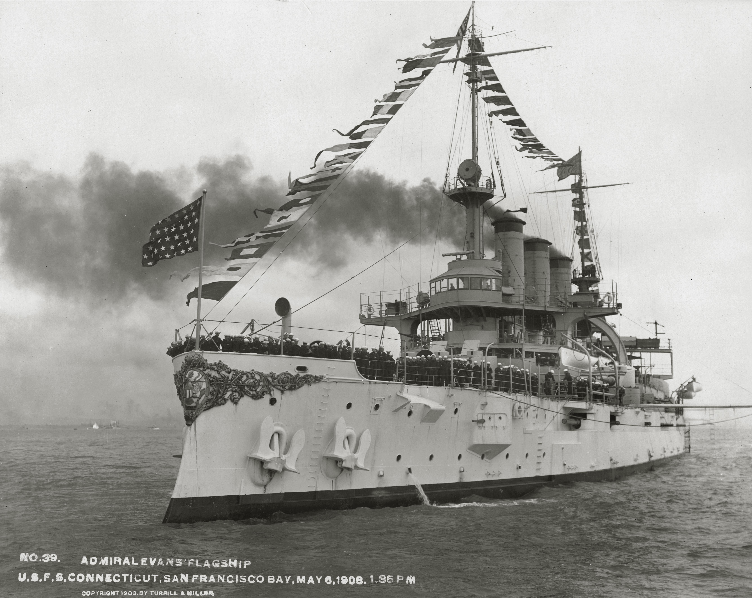
The U.S. “Great White Fleet” (all boats were painted white to stand out as they entered various ports) world tour (1907-1909) under Theodore Roosevelt was partly a massive gunboat diplomacy exercise. A demonstration of American naval power.
After World War I, the practice became less acceptable internationally, though it didn’t disappear. The League of Nations and later the UN Charter established norms against the use or threat of force to settle disputes. However, the underlying concept evolved into modern “naval presence operations” and “show of force” missions.
Today’s version is more subtle but follows the same logic…parking an aircraft carrier group near a trouble spot, conducting “freedom of navigation” operations, or deploying naval assets during crises. The U.S. has used this approach repeatedly: in the Taiwan Strait, the Persian Gulf, and near North Korea.
Russia and China practice their own versions in their spheres of influence.
The key distinction is that modern gunboat diplomacy usually operates within (or claims to operate within) international law frameworks, whereas the 19th-century version was nakedly coercive and often directed at forcing unequal treaties on weaker states. But the basic principle of using naval power as a diplomatic tool through presence and implied threat, remains very much alive.
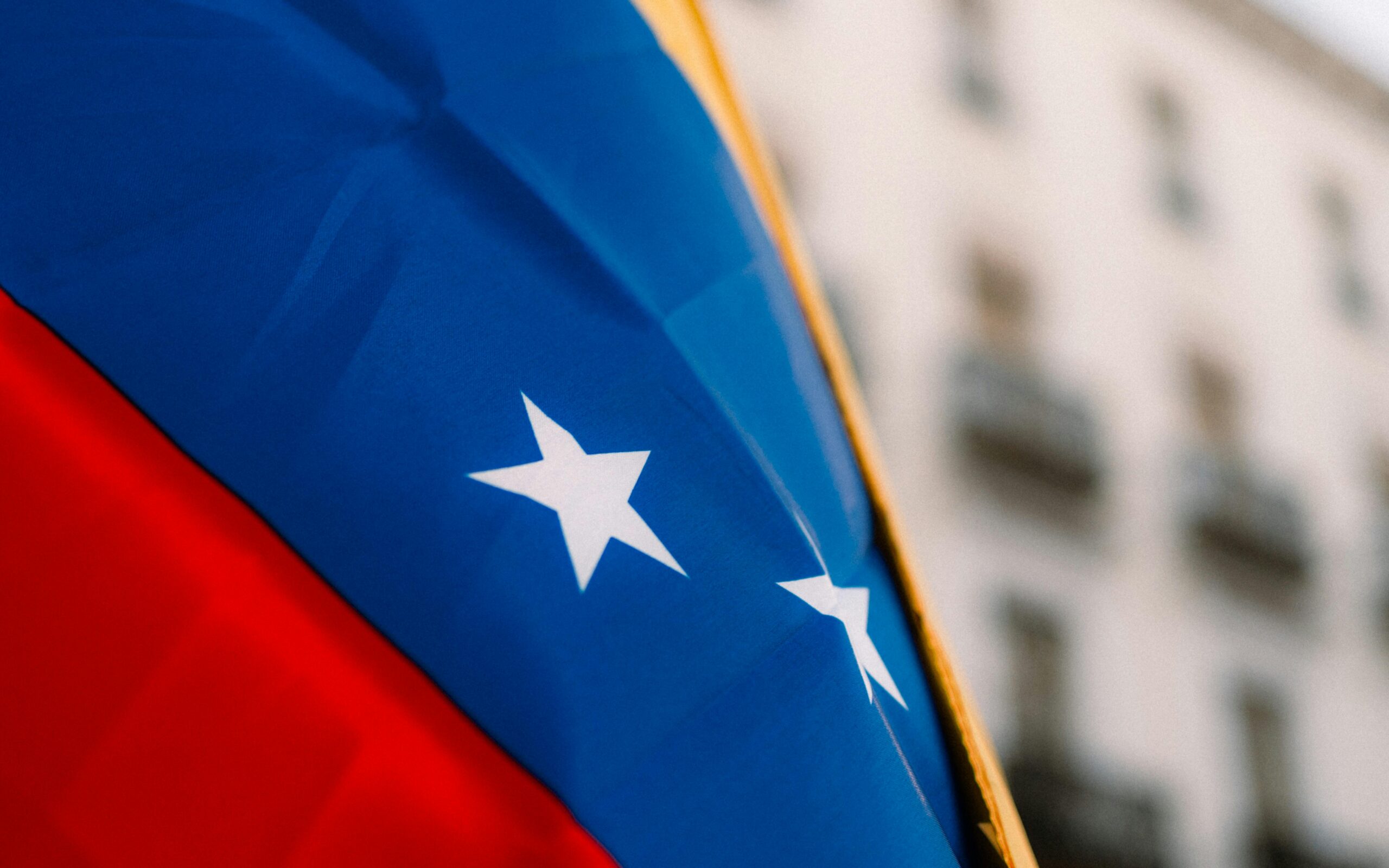
Witness Venezuela.
To leave no doubt…I’m in favor in this instance because it’s the best choice of a bad lot of choices. I understand the War Powers risks and know that you had better have a clear strategy for going in and getting out. We sometimes lack that. Of course, you have members of Congress claiming the President is usurping the War Powers Act by essentially declaring war on a country without Congressional approval. I am moved to reply that if they’re not going to use the War Powers Act, it might not be a bad thing if Trump borrows it to go after drug cartels. I mean, they had the power and never used it.
And I think we can be easily convinced that the goal of the United States is to get rid of global narco lords posing as patriotic officials, get rid of a regime (or plural) that essentially hijacks a country and turns it into a narco business. And then we should leave. None of us wants to occupy Venezuela and there is an active political resistance movement complete with duly elected officials who can assume power and begin the rebuilding process.
Basically, we should be able to move from sending our money there for drugs and instead, send our money there for the crude oil they have in abundance.
I’m cool on that.
Of course, we all know that Mexico is the thornier problem. Trump has an MO for these things. He wanted to try Federal involvement in local crime prevention, so he started with DC as a kind of test case, a laboratory for what could and could not be done. And then, extended the strategy to less hospitable places.
I think the same thing with Venezuela. He picked the easy mark and is going after it (or by the time we publish, will have done so). He called the former bus driver and told him it might be best to leave. Once he does that, then the bus driver’s friends will begin to peel off…they would hardly believe that Maduro is going to throw himself in front of a bus for them (nice bus metaphor there).
I have been a life student of history. And my reading and studying of history makes abundantly clear that you can’t have widespread corruption without widespread corruption in the political class. If you are a major producer and exporter of illegal drugs, and the tentacles of those criminal organizations find their way into the very fabric of your country, then it becomes easy to measure the corruption present in the political class.
One is reminded that Al Capone put the pols and the police on his payroll.
So, one has to assume endemic corruption in Mexico but one just doesn’t know if that reaches all the way to the President of the country. And Mexico is a major trading partner, and we have a large Mexican emigrant population here.
But you also have to assume that they also would like to see these organizations dealt with. After all there is no natural support system for narco organizations outside of their own ranks and so, political resistance to dealing with them can never be full-throated.
Trump is using a time-tested and time-worn strategy that has worked in the past. It is coercive, yes, but your moral judgement has to rest on exactly whom and/or what is being coerced. It’s quite one thing to force the Japanese to open their country to the outside (which one can question on moral grounds) but quite another to throttle people engaged in poisoning our people.
To be clear, the answer to the drug problem ultimately lies with Americans…no customers, no drug problem. But to the extent supplies can be choked off, prices will have to rise and in that perhaps economic pressures can help mitigate what will become an increasingly expensive way to live.
The root causes, as you know, lie in poverty, but this doesn’t explain suburban cocaine users.
From 20,000 feet, it seems pretty simple to me. Efforts to date have not been hugely effective, and if you’re going to go after the drug problem in earnest, you need to step up the game and…go after the drug dealers.
There is an ocean of illegal drugs in this country, and it seems clear the government is now turning new valves to begin to pressure that inflow. All good, even with the attendant risks.
You see a fluffle going on about those three or four survivors to the missile attack and the second fire event to kill them. I would just mention that in the United States, it is estimated there are between 80,000 and 100,000 drug-related deaths each year.
Who speaks for them?
Thoughts, questions, or reflections? I’d love to hear them. You can reach me anytime at anthony@workingprofit.com