May 1, 2026
In my prior life, one of the most difficult situations occurred when a client or client’s spouse passed without leaving a will. It inevitably created delay in settling the estate, it inevitably created frustration and anxiety in the client family. And due to delays, it would sometimes cost a lot of money. Not only to navigate the situation but the potential to have the family locked out of making any investment decisions in estate assets.
In this discussion, the obvious: I am not a lawyer, and you should not act on anything I write here. Seeing a lawyer in this area is a gone conclusion. And you never know if I’ve misstated something. And then the rules in your state can be different and so forth. This below is general advice not legal advice.
Intestate means you have died without a will. As an example of exactly what that can mean:
In Florida, dying without a will means your estate passes under the state’s intestate succession rules (Chapter 732 of the Florida Statutes). The Probate Court appoints a personal representative, and assets pass according to a fixed set of rules.
This only governs probate assets…anything with a beneficiary designation (life insurance, IRAs, 401(k)s) or held jointly with right of survivorship passes outside probate regardless.
Here’s how the distribution works:
If survived by a spouse:
Spouse only, no descendants → spouse gets everything.
Spouse and descendants, all of whom are also descendants of the spouse, and the spouse has no other descendants → spouse gets everything.
Spouse and descendants, all of whom are also descendants of the spouse, but the spouse has other descendants (i.e., stepchildren to you) → spouse gets half, your descendants split the other half.
Spouse and one or more descendants who are not descendants of the spouse → spouse gets half, your descendants split the other half.
No surviving spouse — assets pass in this order, stopping at the first level with living takers:
Descendants (children, then grandchildren, etc.) per stirpes — meaning a deceased child’s share drops down to their own kids.
Parents, equally, or the survivor.
Siblings and descendants of deceased siblings, per stirpes.
Half to maternal grandparents (or their descendants — aunts, uncles, cousins on mom’s side), half to paternal grandparents (or their descendants). If one side has no takers, the whole estate goes to the other side.
Family of a last deceased spouse (kindred of the most recent prior spouse who predeceased you).
Escheat to the State of Florida if no one in the above categories exists. This is rare.
Well, as you read through the rules, I’m sure you’ve thought about your own situation. But even if you feel you’re “good to go” (literally and figuratively!), consider the delay that ensues. The personal representative is now in charge and your spouse/family reports to that individual. Why would you allow that to happen? Most especially because it is oh so easy to avoid.
Not convinced? Here are some additional rules in Florida.
The homestead is treated separately and has constitutional protection. If you’re survived by a spouse and minor children, you cannot devise the homestead — and even intestate, the spouse generally gets a life estate with a remainder to the descendants (or, since 2001, the spouse can elect to take a one-half tenancy in common with the descendants instead).
The spouse is also entitled to exempt property (certain household furnishings up to $20,000, two vehicles, qualifying tuition programs, certain death benefits) and a family allowance of up to $18,000, both of which come off the top before intestate distribution.
Finally, “descendants” in Florida includes adopted children fully, and includes children born outside marriage if paternity is established under Florida law.
So, guess what the surviving spouse or the family is going to do? Yes! They’re going to hire a lawyer to figure it all out.
Thus, you can hire one now and control events, or your family can hire one later and deal with all the things you should have settled yourself.
Caring.com data shows 81% of those aged 72 or older and 58% of boomers have estate-planning documents. But overall, 74% of all American adults do not have a will. The younger the person, the less likely they are to have one. But this is wrong! Many younger adults have meaningful assets. In addition, the planning that goes into a will is a really good starting point for them to think seriously about their money and where its going and what the longer term might look like for them.
There are, today, several websites that offer fill-in-the-blanks estate planning documents. The cost is modest ($200?), but I have no clue how good (or bad they are). Seeing an estate lawyer is much more expensive. But the laws are the same for everyone and so you might shop around a bit. To me, this is a classic opportunity to be penny wise and pound foolish. Get a lawyer. But most definitely get on the stick.
One other thing to mention. The process doesn’t just involve settling your estate. Michael and I just completed updates to our estate plans. In addition to the work settling the estates (beneficiaries etc.), it involved two other crucial documents.
First, the Health Care Proxy. Under what circumstances is medical care stopped in end-of-life situations? And who is appointed to make that decision? In whose hands are you going to place your life?
And then, the Power of Attorney. Who is designated to handle your affairs if you are incapacitated and cannot act on your own? And what exactly are they allowed to do?
These are both vitally important documents to have in place!
My goal here today was to motivate those who have not yet gone through the process of putting their affairs in order. Over the years, I found that some people just don’t want to face the thought of their demise, but honestly, it can’t be avoided. And then others have great difficulty making what are sometimes difficult questions. Here’ a simple one. You have two children. One has two children and one has four. Do you make provisions for the six grandchildren as equal shares each? If you do, then one child’s children will get 2/3 of the bequest. An alternative, 50% to each child’s children. It can get complicated.
I’m not getting into complex situations involving long-term care, Federal and State estate taxes, trusts, bequests to family members who in turn need care due to health issues. All the more reason to see a good lawyer.
For what it’s worth, I’m on the 12th version of my will and estate plan. Over the decades, my situation has evolved and the old will didn’t cover new realities. So, I would just mention that this is very much a process, and you might find yourself changing it every 5-10 years…this is not unusual.
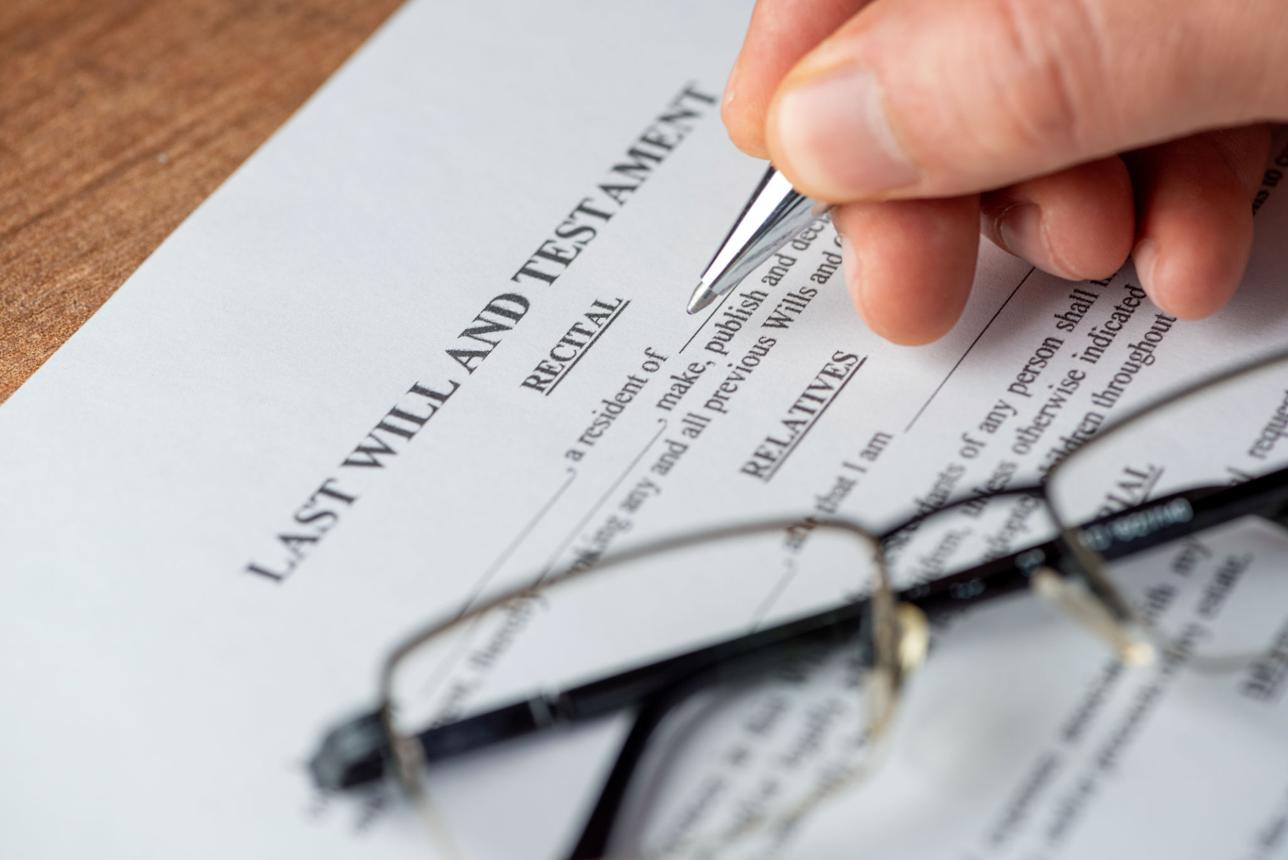
Please, get a will. Please?
Thoughts, questions, or reflections? I’d love to hear them. You can reach me anytime at anthony@workingprofit.com