May 8, 2026
Two health-related items that came my way this past week…

I’m not quite sure when my hearing “thing” began, but I am sure it seems to be worse. It is composed of basically three aspects:
- Music in restaurants and bars seems to be getting louder.
- My hearing has diminished in a couple of higher frequencies, so women’s voices are difficult sometimes to understand in a noisy environment.
- Stupid comments and stupid music are, unfortunately, still heard.
Our ears are basically tiny, exquisite machines, and like every other tiny, exquisite machine we own, they wear out. The fancy term for age-related hearing loss is presbycusis, which sounds like a Greek philosopher, but is just what happens when the hair cells inside your cochlea…the little guys responsible for translating sound waves into signals your brain understands…start calling it quits. Design flaw? They don’t grow back. Once they’re gone, they’re gone.
Now the first thing to go is usually the high frequencies. So, I’m normal. Birds chirping, the consonants in your grandkid’s voice, the beep that tells you the dryer is done. You start nodding politely in restaurants because the ambient noise has turned every conversation into a Charlie Brown teacher monologue. This is why “I can hear you, I just can’t understand you” becomes the unofficial motto of anyone over sixty.
It’s gradual enough that most people don’t notice for years. But spouses notice!
Me: “Hey Michael, is the TV too loud?”
She: “I can’t hear you. It’s the TV!” (said with kindly smirk face)
The TV volume creeps up. You start reading lips without realizing it. Tinnitus, which is that phantom ringing — often shows up and doesn’t leave. I don’t have that one.
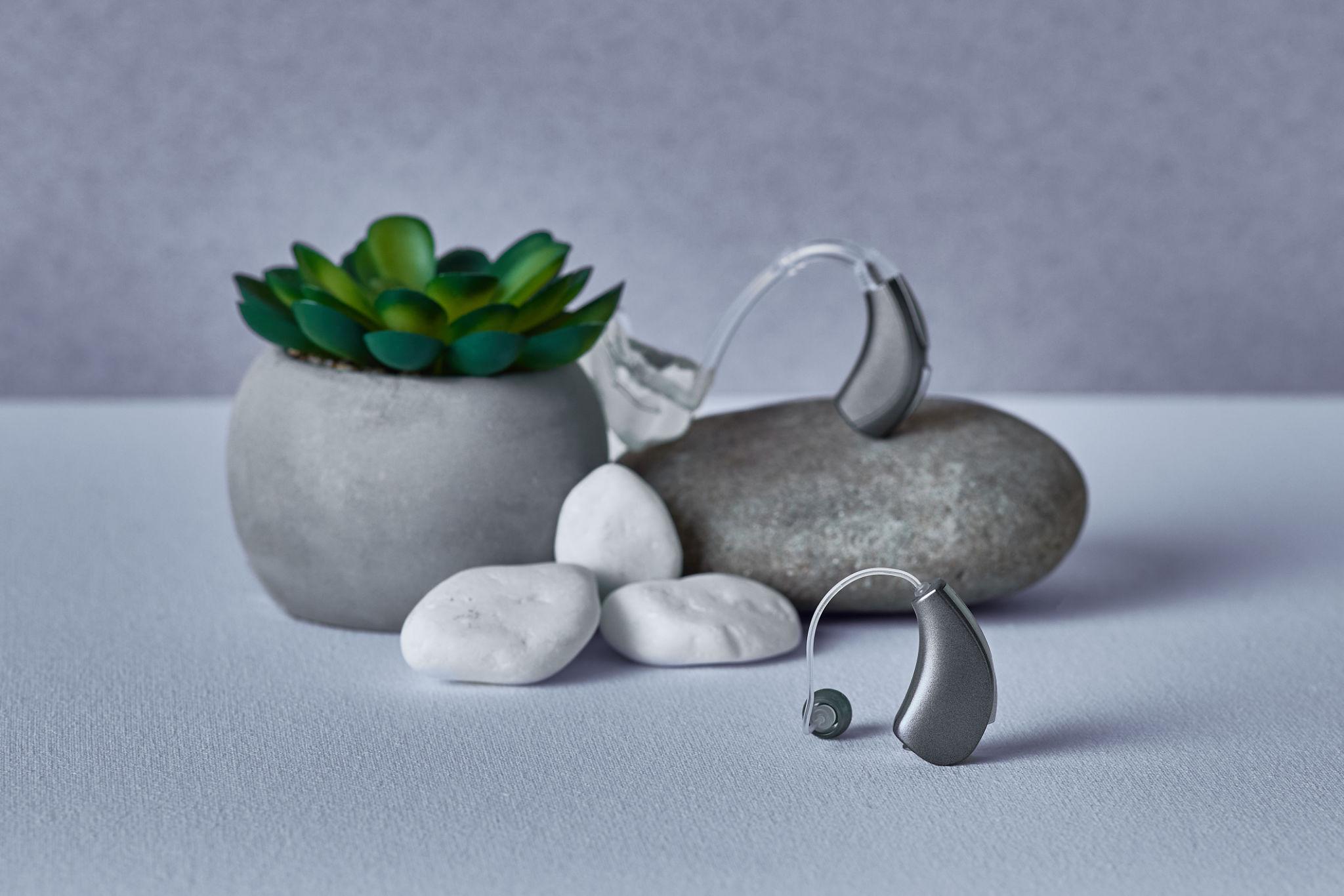
The good news? Modern hearing aids are nothing like the squealing beige hockey pucks your grandfather wore. They’re tiny, Bluetooth-enabled, and basically invisible. The bad news? People still wait an average of seven years to get them, mostly out of vanity.
Now here is the thing (as I like to say): It is a fact that if your brain strains to understand the sounds coming in, over time, the chances of dementia increase. Because your brain only has so much capacity and if you constantly fill it up with sound-translation, a lot of cognitive thinking kind of atrophies…the ‘executive’ function and the memory function. Example:
The classic Johns Hopkins study tracked 639 adults for nearly 12 years and found that mild hearing loss doubled dementia risk, moderate loss tripled it, and severe hearing impairment made people five times more likely to develop dementia. The Framingham Heart Study echoed this, finding that any hearing loss was associated with a 71% increased risk of developing dementia.
The average out-of-pocket cost for a pair of hearing aids is around $2,694, ranging from under $100 to over $8,500 depending on the device and purchase channel. I have a pair; I’m up for a new hearing test and replacement. I want an in-ear model, so I don’t have those mini-batteries stacked up behind my ears…that’s the vanity portion.
No matter. I hope this dementia-alert will get some people off the dime. It really is an important situation to attend to, and continued procrastination will clearly make it worse…remember, hearing loss is not recoverable.
Dermatology
I visited my dermatologist yesterday. Lauren is board-certified in dermatology and an annual visit with her is my routine.
I come from a Sicilian family, and so skin cancer is something I’ve just not seen in my family going back over 100 years. I mean, I’m not 100 years old, but thinking now back to my 19th century grandparents. Just not an issue and that’s genetic.
Mediterranean populations have traditionally been considered at low risk for cutaneous melanoma because of their relatively dark complexion. The Fitzpatrick skin type system explains why: darker skin has more melanin, which absorbs and dissipates UV radiation far more effectively than fair northern European skin, significantly reducing DNA damage in skin cells.
As a result, there is always the temptation to ignore it and not go. Which you would agree is not optimal. When you go to your doctor, mainly, you just don’t want to be unlucky. You know, you feel fine, you go and then get a swinging iron ball on the side of the head. So, ignoring the derm is a good way to get unlucky…” I wish you had come and seen me earlier.”
25 years of Florida sun does its thing. Fortunately, I don’t have any issues, but the appointment was still me saying…And what’s this? And what’s that?…
As a public service, I asked my AI program to outline how often we should see a dermatologist. Here you go:
By Age Group (Average Risk)
Teens & under: No universal recommendation for low-risk individuals, but children with a high number of moles or a parent/sibling with melanoma should see a pediatric dermatologist to establish a screening schedule. Prizant Dermatology
Ages 20–40: A professional skin exam every three years is the American Cancer Society’s baseline recommendation, especially for those in sunny climates. Hearite
Ages 40+: The recommendation jumps to once annually. Hearite
Ages 65+: Annual screening is strongly recommended, as skin cancer becomes increasingly common from age 55 onward. Hearing Aid Forum
Adjusted for Risk Level
Moderate risk (fair skin that burns easily, significant cumulative sun exposure, history of severe sunburn, or numerous moles but no personal/family history): annual professional exams are generally recommended regardless of age. Al Jazeera
High risk (personal or family history of skin cancer): every 3–6 months for professional exams, plus monthly self-examinations. Groupon
Family history of irregular moles or skin cancer: at least every 6 months. Linner Life
Self-Exams
The American Academy of Dermatology recommends monthly self-exams for everyone — checking all skin spots, moles, and bumps for changes in size, shape, or color. NPR
Bottom line: The age guidelines are a floor, not a ceiling. For someone with your Florida lifestyle and significant sun exposure, most dermatologists would lean toward annual exams starting at 40 regardless of other risk factors — the cumulative UV exposure from living in a sunny climate is itself a meaningful risk factor.
Just parenthetically, I’d mention I had my annual eye exam this morning. I have two nevi in my eyes. These are pre-cancerous and need watching. Annual visits for monitoring will do it. As in the derm thing, just do it.
Thoughts, questions, or reflections? I’d love to hear them. You can reach me anytime at anthony@workingprofit.com